Week
1Week
2Week
3Week
4Week
5Week
6Week
7Week
8Week
9Week
10Week
11Week
12Week
13Week
14Week
15Week
16Week
17Week
18Week
19Week
20Week
21Week
22Week
23Week
24Week
25Week
26Week
27Week
28Week
29Week
30Week
31Week
32Week
33Week
34Week
35Week
36Week
37Week
38Week
39Week
40Week
41Week
42
Baby development this week
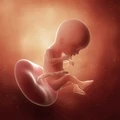
At 17 weeks pregnant, your baby is in a phase of rapid whole-body growth. Rather than forming lots of brand-new structures, the body is now getting bigger, stronger and more refined.
Your baby may now be around 13cm long from head to bottom and weigh roughly 150g, although babies vary. They are still small, but the difference from just a few weeks ago is dramatic.
This week, your baby is practising important automatic movements. Swallowing, mouth movements and blinking-like responses are part of the way the brain, nerves and muscles continue to connect.
Sucking and swallowing will matter for feeding after birth, but these skills develop gradually over many weeks. Your baby will continue adding and strengthening reflexes throughout pregnancy, so that by birth many automatic behaviours are ready to go.
Your baby’s movements are also becoming stronger. You may still not feel anything yet, but inside the uterus, your baby is stretching, turning and practising the tiny movements that will gradually become more noticeable.
What's happening to your body
At 17 weeks pregnant, your body is supporting a baby that is growing quickly, so appetite can increase around now. Use that as a cue to eat regularly rather than waiting until you are ravenous and then grabbing whatever is closest.
You may still feel tired or low on energy. A full workout is not the only answer. Short bursts of movement can help: a 10-minute walk, light stretching, gentle swimming or pregnancy yoga can improve circulation and stop you feeling sluggish.
Dizziness or light-headedness can happen in pregnancy, especially when you stand up quickly, get too warm, go too long without eating, or have not had enough fluids. Blood pressure changes can make your body slower to adjust when you move from lying or sitting to standing.
To reduce dizzy spells:
- get up slowly from bed or the sofa
- avoid standing still for long periods
- eat regularly
- drink enough fluids
- sit down as soon as you feel faint
- avoid overheating
- keep a snack with you if you are out for a while
How you might be feeling
Week 17 can make pregnancy feel more real, especially if you are waiting for those first unmistakable movements. You might feel little flutters, bubbles or pops and wonder whether it was the baby or just digestion.
It is fine not to know. Early movements are often subtle, irregular and easy to miss. They do not usually feel like obvious kicks at first.
If this is not your first pregnancy, you may recognise movement earlier because you know what you are looking for. If this is your first, it may take longer. Placenta position can also affect when movement becomes easy to feel.
Things to think about this week
This week, focus on energy management. Your baby is growing quickly, and your body needs steady fuel, fluids and movement.
Start with the basics:
- eat breakfast, even if it is small
- keep a snack in your bag, car or desk
- drink water regularly rather than waiting until you feel thirsty
- stand up slowly
- take short movement breaks if you sit for long periods
- sit or lie down as soon as you feel faint
- avoid overheating
If your appetite has increased, choose filling snacks that actually help: toast, yoghurt, fruit, nuts, cheese and crackers, soup, eggs, porridge, hummus, or leftovers from a proper meal. You do not need to eat for two, but you do need to avoid running on empty.